Monday, April 30, 2012

Joshua Sanford

Captain Joshua Sanford


Joshua Sanford was a pilot with the 14th Air Force, 75th Fighter Squadron based in China during WWII. This Air Force was tasked with the job of helping defend China against the Japanese and to provide supplies to the Chinese Army. They were better known as "The Flying Tigers",  a name previously attached to the American Volunteer Group that was comprised of 100 pilots and 150 support personnel. 


The original Flying Tigers were under the command of Claire Chennault who took on the job of reorganizing the Chinese Air Force. President Roosevelt signed a secret executive order which allow Chennault to organize "unofficial" assistance with the Chinese. 


The AVG compiled one of the greatest records of the war before being discontinued in 1942. The name Flying Tigers came from the nose art painted on each plane which depicted the grinning mouth, flashing teeth and the evil eye of the tiger shark. Newspapers tagged them "Flying Tigers" and the name stuck. This group was credited with 294 enemy aircraft shot down while the Flying Tigers only lost 12 aircraft during their short tenure.

Wednesday, April 18, 2012

Bernard L Anderson


How a boy from LaValle became a Filipino Warlord.


In December, 1941, Bernard L. Anderson, who grew up grew up in LaValle, was frantically driving south in a brand new Oldsmobile. His cargo was yeast. Anderson was a First Lieutenant in the Air Corp serving as an administrative and supply officer in the city of Manila on the northern most island of Luzon of the Philippines. The Americans, under the command of General Douglas MacArthur, had been order to retreat to Bataan when the Japanese invaded Luzon from the north at then end of 1941.

The retreating army had taken truckloads of flour with them for making bread but they forgot the yeast. Anderson returned to the nearly abandoned city to retrieve the yeast and then catch up with the armed forces whose destination was Bataan. The Bataan Peninsula was the last stand destination for the US and Philippino forces. They hoped to hold out until reinforcements could arrive from the United States. However, the Japanese forces began their siege on January 7, 1942. The majority of the American and Filipino forces surrendered on April 9 and were forced to march the 62 miles from Bataan to Tarlac, which became known as the Bataan Death March.

Anderson and a companion escaped into the mountains when the order to surrender was given. They hid from the Japanese in the jungle and trenches. With nothing to eat and very little to drink, they wandered through the jungle until they stumbled across a hidden mountain camp of Filipinos. “Those people took care of us, and they shared everything they had with us, ” Anderson said.

Several other American officers and men escaped from Bataan and guerilla groups began to form throughout the 40,000 square mile island. Eventually, 1,400 groups developed consisting of 250,000 guerilla fighters.

Monday, March 19, 2012

Owen M. "Tony" Manville

PFC Owen "Tony" Manville


Pfc. Tony Manville from LaValle, was killed in action on March 22, 1944. Pfc. Manville was a member of the First Calvary Division,  one of the most famous and most decorated combat divisions of the United States Army.


He entered active duty in May, 1942 and trained stateside in Southern California until deployment to the South Pacific in June of 1943. The division arrived in Queensland, Austrailia for further training before shipping off to New Guinea where they staged for the Admiralty Islands Campaign which was scheduled to commence in February, 1944. 

Cpl Edmund J. Greenwood

Cpl. Edmund J. Greenwood from LaValle was killed in action on June 16, 1944 while taking part in the invasion of German occupied territory in France, 10 days following D-Day. Cpl. Greenwood was a member of the 82nd Airborne Division and entered service on March 24, 1942. He left his job at Kingery and Doering garage in LaValle and ended up in Camp Clairbourne, Louisina were the 82nd Infanrty Division was redesignated the 82nd Airborne Division, the Army's first airborne division. The Division was under the command of Major General Omar Bradley. In April 1943, the paratroopers to North Africa to participate in the invasion of Italy. The Division's first two combat operations were parachute assaults into Sicily on July 9 and Salerno on September 13. The 82nd then moved to the United Kingdom in November 1943 to prepare for

Monday, February 20, 2012

Royal "Roy" Thurber


Cpl. Royal Thurber

Royal (Roy) Thurber was a charter member of the Reedsburg Veterans of Foreign Wars, Thurber-Greenwood Post 1916. He is one of the veterans honored by having his name attached to the Post title.

Thurber was inducted into service on June 3, 1916 as a member of Company A, 128th Infantry of the Wisconsin National Guard. His unit was sent to the Mexican border where they served with General Pershing to chase Pancho Villa along the Texas border and into northern Mexico.


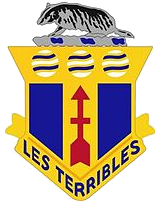
The Wisconsin troops were again activated in 1917 as the U.S. declared war on Germany. After a period of intensive training, the Wisconsin Guardsmen were redesignated as the 128th Infantry, assigned to the 32nd Division and sent to France. In the closing months of the war, the 128th Infantry participated in several major campaigns including Alsace, Aisne-Marne, Oise-Aisne and Meuse-Argonne. For their fury in combat, the nickname "Les Terribles" or "The Terrible Ones" was given to them by the French. As they pierced the famed Hindenburg Line, the 32nd Infantry Division became known as the "Red Arrow" Division - a name that has remained to the present day and is reflected in the shoulder patch.
Corporal Thurber was wounded in action during the Third Battle of Aisne on August 31, 1918, when a bullet struck his pocket watch which in turn is credited with saving his life. The Third Battle of Aisne was the Spring offensive staged by the Germans in an attempt to capture the Chemin Des Dames Ridge before the American forces completely arrived in France. The Battle began on May 27, 1918 and while the Germans were able to advance to the Marne River by mid summer, the arrival of the American forces put an end to the advancement.
Corporal Thurber convalesced from his wound and finally sailed for home on April 20, 1919 and was discharged on May 6, 1919.
THURBER MURDERED!

Monday, February 13, 2012

Arnold "Ted" Finnegan

Petty Officer 2nd Class Arnold "Ted" Finnegan

Petty Officer 2nd Class Arnold "Ted" Finnegan died from wounds received following action at sea somewhere in the South Pacific during the late summer of 1942. Ted was 24 years old.

His mother, Mrs. Nellie Finnegan had received 2 letters from her son that summer. The first one was date June 18 in which he stated that he was doing well. She received another letter from him that was dated August 17, just a month before she received notice from the War Department, advising her of his death. He was the first known casualty of World War Two from the local area. His name was also added to the name of the VFW Post which is now known as the Fuhrman-Finnegan post. 

Sunday, February 5, 2012

Charles P. Fuhrman


Sgt. Charles P. Fuhrman

Sgt. Charles P. Fuhrman died in a base hospital on November 18, 1918 as a result of wounds received during battle on August 30, 1918.

Sgt. Fuhrman was a part of the Second Battle of Marne that began on July 15, 1918 and finished on September 16, 1918. This was considered to be the turning point of the war as the battle became the Allies first victorious offensive of 1918. Sgt. Fuhrman was a member of Company A, 128th Infantry of the 32nd Infantry Division of Wisconsin and Michigan. The 32nd was the first division to pierce the German's Hindenburg Line. The division adopted the Red Arrow shoulder patch with a line through the middle to signify the division's tenacity in crossing through enemy lines, thus becoming known as the Red Arrow Division. The French gave them the nickname Les Terribles in regard for their fortitude in advancing over terrain previous units could not get through.